Why Smart People Still Make “Bad” Money Decisions

Have you ever wondered…
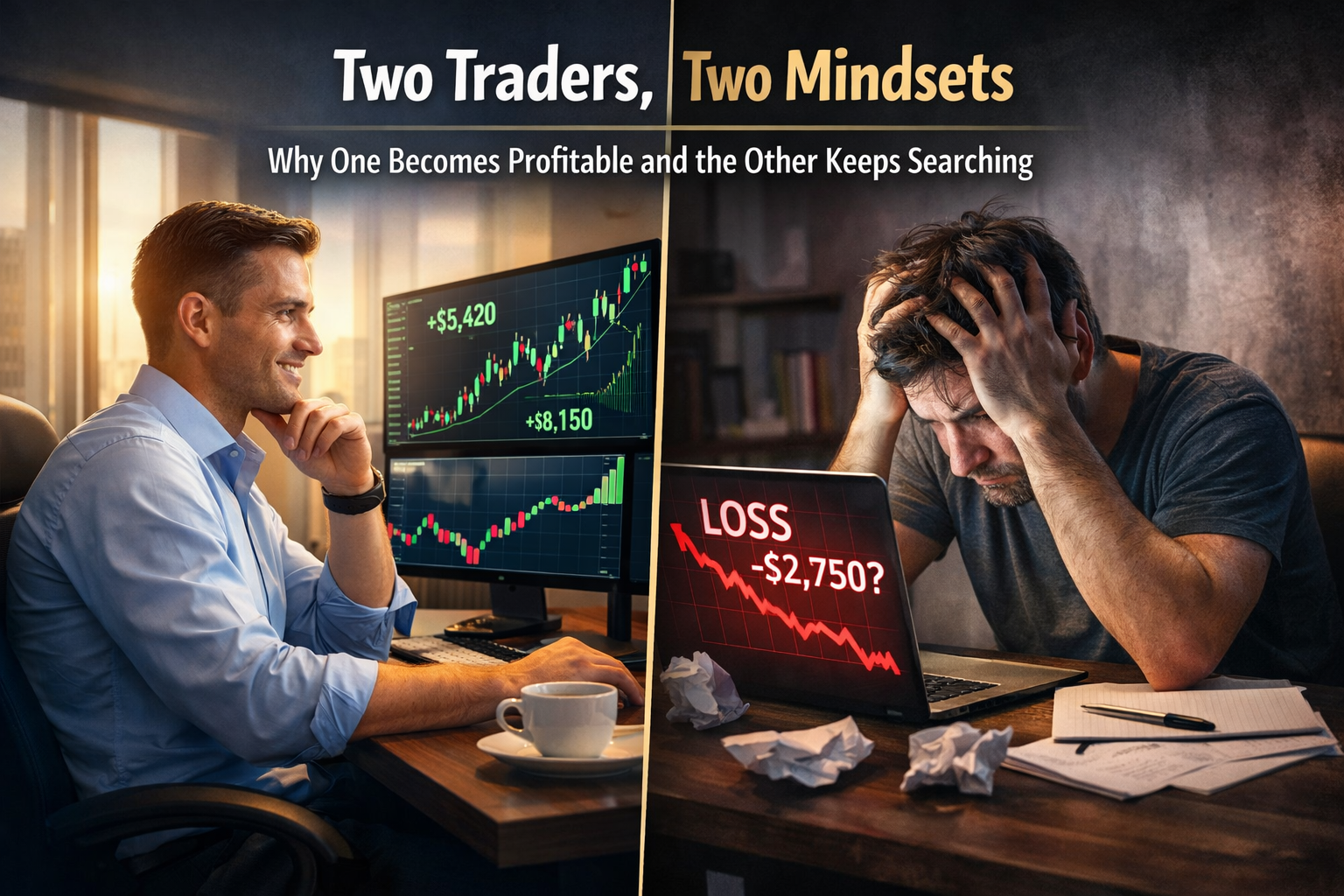
Why someone takes a risky loan they can’t afford?
Why people avoid investing even when they know it’s important?
Why some chase quick money while others play safe?
At first glance, these decisions seem irrational.
But here’s the truth that flips everything you believe about money:
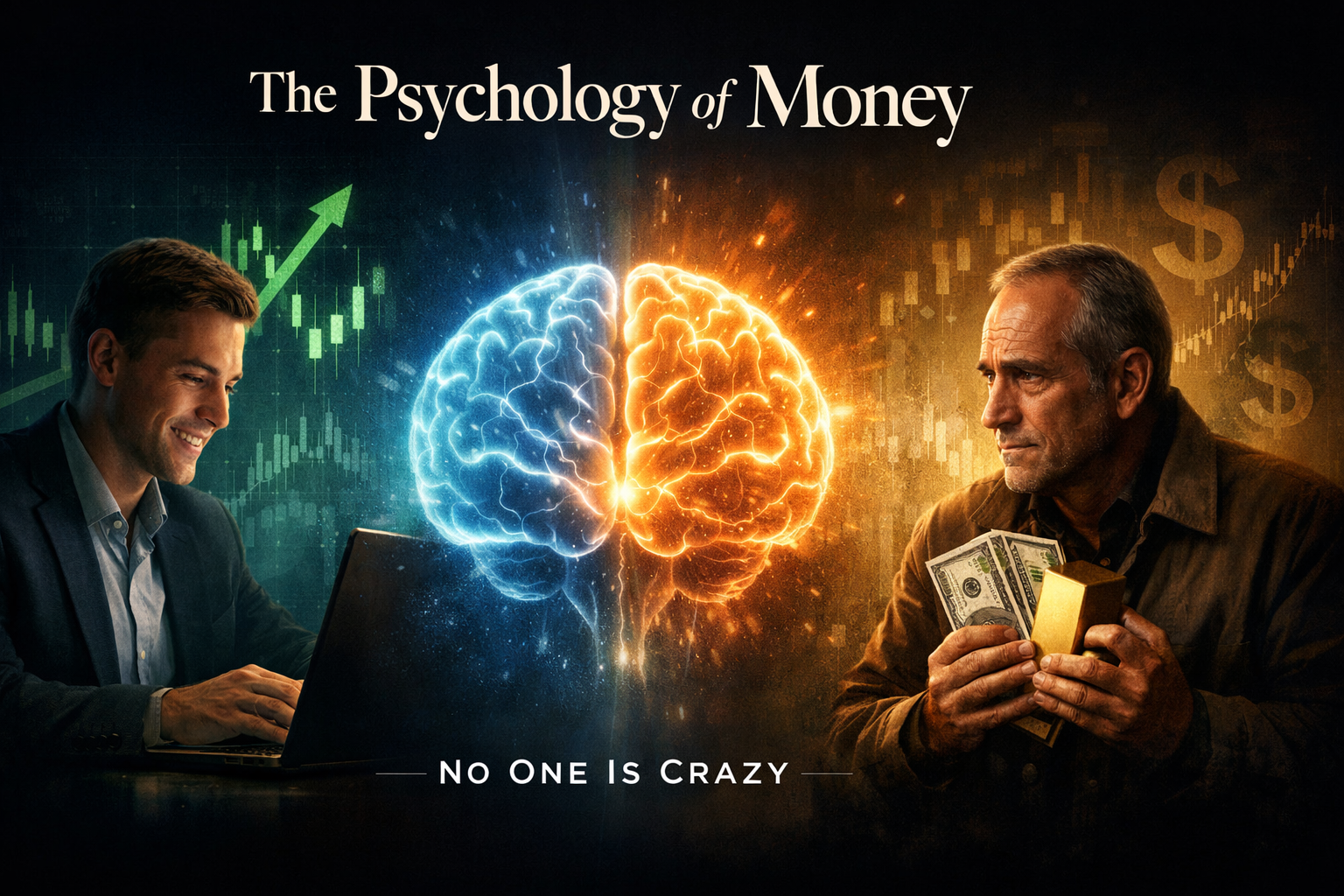
No one is crazy when it comes to money.

This is the core lesson from Chapter 1 of The Psychology of Money — and once you understand it, you’ll never judge financial decisions the same way again.
The Invisible Force Behind Every Money Decision

Every financial decision is driven by something deeper than logic.
It’s driven by:
- Personal experiences
- Childhood environment
- Economic background
- Emotional triggers
- Life circumstances
According to the book:
Your personal experience makes up a tiny fraction of reality—but most of how you think money works.
That means…
You are not seeing money as it is.
You are seeing money through your life story.
Real-World Example #1 — The Risk Taker vs The Safe Player
Let’s take two people:
Rahul (Risk Taker)
- Grew up in a business family
- Saw money come and go
- Learned that risk = opportunity
Arjun (Safe Player)
- Grew up in a middle-class family
- Saw financial struggles
- Learned that risk = danger
Now both are asked to invest in stocks.
Rahul invests aggressively.
Arjun avoids the market completely.
Who is right?
Both.
Because their decisions are not based on facts — they are based on experiences.

Real-World Example #2 — Why Some People Fear Investing
In India, many older generations prefer:
- Gold
- Real estate
- Fixed deposits
Why?
Because they have lived through:
- Market crashes
- Economic instability
- Inflation shocks
Meanwhile, younger investors:
- Trust stocks
- Invest in crypto
- Use apps for trading
Same country. Same markets.
Different experiences → Different beliefs.

The Lottery Paradox — “Crazy” or Completely Logical?
One of the most misunderstood financial behaviors is:
Why do poor people spend money on lottery tickets?
It seems irrational.
But let’s look deeper.
Imagine:
- You’re stuck in a low-income job
- No growth opportunities
- No financial security
Saving ₹100 won’t change your life.
But a lottery ticket?
It gives hope.

It gives a temporary feeling that life could change.
So what looks like a bad financial decision…
Is actually an emotional decision rooted in survival and hope.
Why Financial Advice Doesn’t Work for Everyone
You’ve probably heard common advice like:
- “Save 20% of your income”
- “Invest in index funds”
- “Build an emergency fund”
Sounds simple, right?
But here’s the problem:
Money is not just math. It’s behavior.
Two people can hear the same advice:
- One follows it
- One ignores it
Not because one is smarter…
But because their internal stories are different.
Real-World Example #3 — The 2008 Financial Crisis
During the 2008 crash:
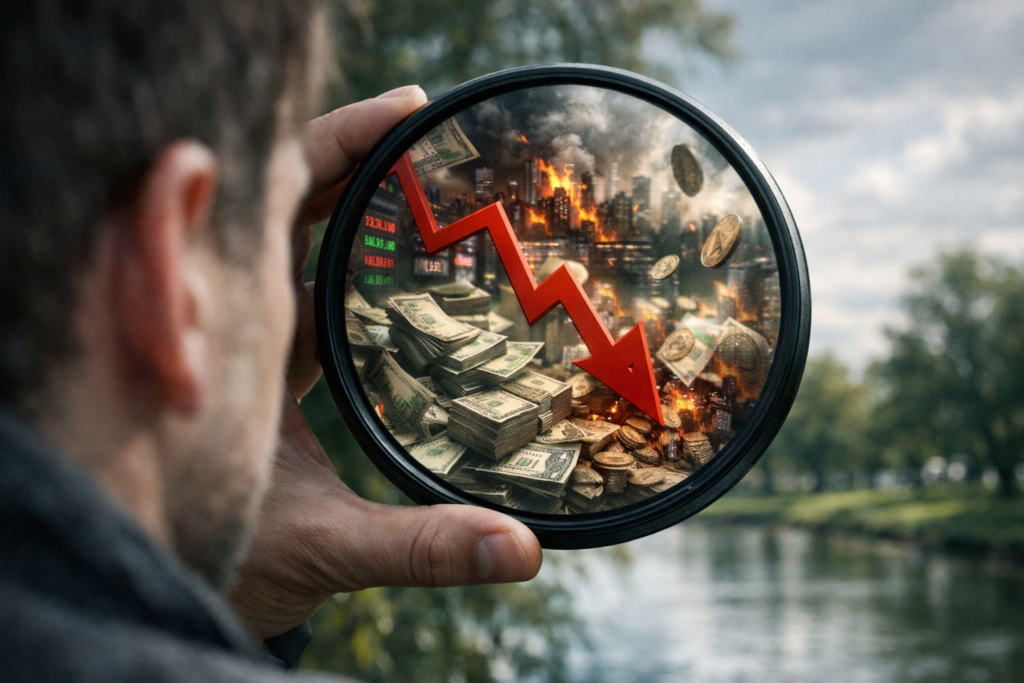
- Some investors sold everything in panic
- Others invested heavily and made fortunes
Why the difference?
Because:
- Some experienced fear and loss
- Others saw opportunity
The same event creates different reactions based on personal psychology.

The Biggest Mistake — Judging Others
We often say:
- “He’s bad with money”
- “She doesn’t understand investing”
- “They are financially illiterate”
But in reality:
Everyone is making decisions that make sense to them.
Even if:
- Their logic is flawed
- Their knowledge is limited
- Their strategy is risky
Their actions are still reasonable within their world.
We Are All Beginners in Money
Here’s something shocking.
Modern finance is still new:
- Retirement systems → recent concept
- Stock investing → mainstream only recently
- Digital finance → barely a decade old
We are all learning money in real time.
So instead of saying:
“I’m bad with money”
Say:
“I’m still learning how money works.”
The Real Lesson — Empathy Over Ego
The most powerful takeaway from this chapter is:
Stop judging. Start understanding.
Before criticizing someone’s financial decision, ask:
- What have they experienced?
- What shaped their beliefs?
- What does money mean to them?
Because:
What looks crazy to you might be perfectly logical to them.
How This Changes Your Life
✔ You stop comparing your journey with others
✔ You stop blindly copying financial strategies
✔ You start building your own money philosophy
✔ You become more patient and less emotional
Final Thought — Money Is More Human Than Mathematical
Money is not just about:
- Numbers
- Charts
- Strategies
It’s about:
- Fear
- Ego
- Hope
- Experience
And until you understand human behavior…
You will never truly understand money.
Join the Brahmastra Trading Ecosystem
🔔 Telegram – Free Learning & Market Updates
👉 https://t.me/trAding_Learner
🌐 Official Website – Indicator & Resources
👉 https://tradingbrahmastra.com
🎓 LMS Portal – Structured Trading Education
👉 https://lms.tradingbrahmastra.com
▶️ YouTube Channel – Practical Market Education
👉 https://www.youtube.com/@trading_Learner
⚠️ Disclaimer
Trading involves risk. All content shared on this website, Telegram channel, LMS portal, and YouTube channel is for educational purposes only and should not be considered financial advice. Always manage risk responsibly and trade